Rallye Automobile Monte-Carlo
What Is the Rallye Automobile Monte-Carlo?
The Rallye Automobile Monte-Carlo is the season-opening round of the FIA World Rally Championship (WRC), held each January across the mountains of the southern French Alps, with its ceremonial start and finish at Monaco’s Port Hercule. It is one of the oldest events in motorsport: founded in 1911 by Prince Albert I of Monaco, it began as a concentration rally — competitors set off from as many as eleven different starting cities across Europe and converged on Monaco, with the winner decided partly on the elegance and condition of the car after the journey rather than pure speed. Twenty-three cars entered the first edition; Henri Rougier won it.
The event has been a fixture of the world championship almost since the championship itself began, holding round-one status on the WRC calendar from 1973 (with a brief detour to the Intercontinental Rally Challenge from 2009–2011 before returning to the WRC in 2012). The 2027 edition marks the 95th running of the rally and a genuine watershed for the sport: it is the first event to run the new WRC27-generation cars, opening a new chapter for the championship at the same event that has opened so many seasons before it.
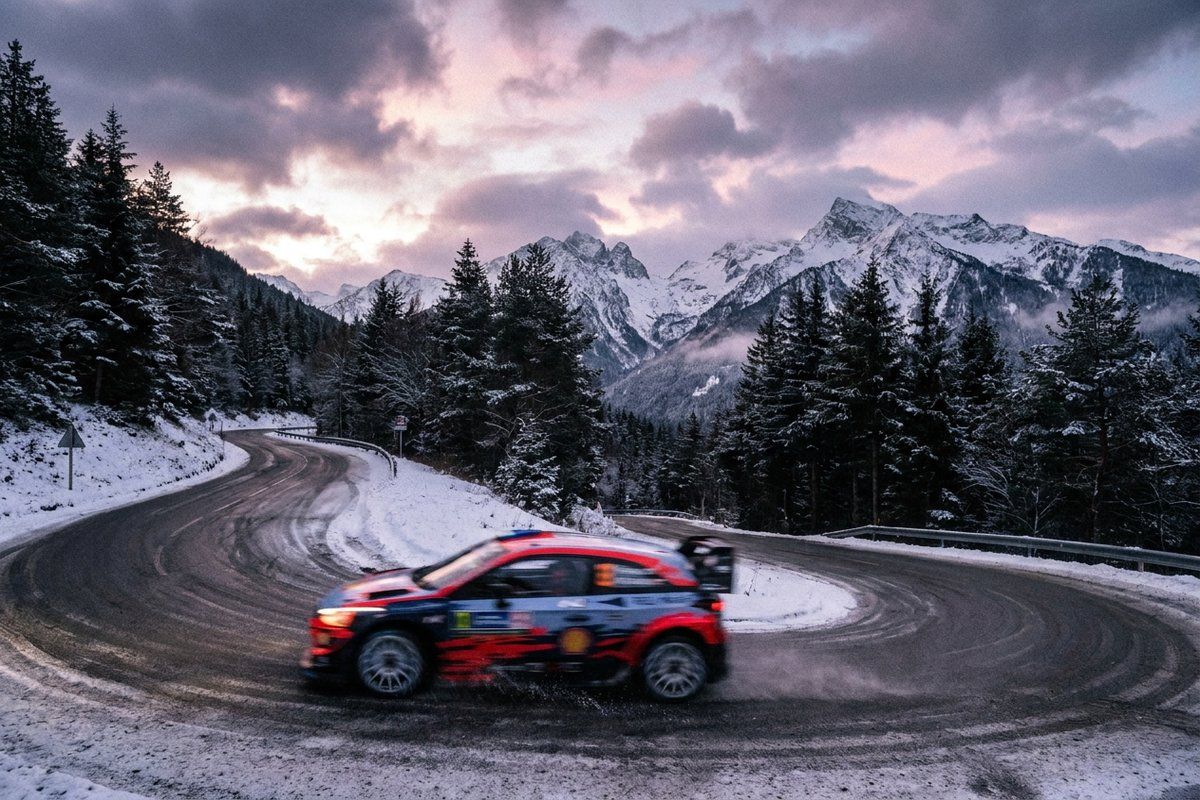
What makes Monte-Carlo distinct from the rest of the WRC calendar is winter itself. Crews face the same stretch of Alpine road in conditions that can swing from dry tarmac to black ice to fresh snow within a single run, sometimes within a single corner — a test of tyre choice and nerve as much as speed. It is also, unusually for elite motorsport, entirely free to watch.
When Does the Rallye Automobile Monte-Carlo Take Place?
The 2027 edition — the 95th Rallye Automobile Monte-Carlo — runs from Thursday 21 to Sunday 24 January 2027. As the opening round of the World Rally Championship season, it sets the tone for the year and traditionally draws large entries from both the top WRC crews and the historic-rally and amateur categories that run alongside the main event.
A rally of this kind typically unfolds over four days, and the ACM has already published the full 2027 route on acm.mc: a shakedown near Gap on the Wednesday, a ceremonial start at Port Hercule in Monaco on Thursday afternoon, three days of special stages run in loops from the Gap service park, and a return to Monaco on Sunday for the Power Stage result, finish and podium. Unlike some recent editions, there is no competitive stage inside Monaco itself in 2027 — check acm.mc for the stage-by-stage detail if you’re planning around a specific one.
Where Does the Rallye Automobile Monte-Carlo Take Place?
Monaco provides the ceremony, not the competition. The ceremonial start on Thursday afternoon and the finish, prize-giving and podium on Sunday are staged at Port Hercule, Monaco’s harbour beneath the Rock — the same setting used for the Monaco Yacht Show and much of the Monaco Grand Prix’s lower circuit. Some past editions have added a short super-special stage through the streets around the harbour; the published 2027 itinerary does not include one, so this year Port Hercule is purely a start-and-finish venue, not somewhere you’ll see the cars racing.
The competitive heart of the event is a genuine drive away from the coast. The rally is based out of a service park in Gap, in the Hautes-Alpes, and almost all of its special stages run well inland: Thursday’s three stages, run straight after the Monaco start, are in the Alpes-de-Haute-Provence around Col de Bleine/Aiglun, Clumanc/Lambruisse and Esclangon/Seyne-les-Alpes; Friday’s six stages loop through the Hautes-Alpes and Isère hinterland around Dévoluy and Corps; and Saturday’s six stages move into the Drôme and Hautes-Alpes, around Laborel, Montauban-sur-l’Ouvèze, La Motte-Chalancon and Sigottier. None of that is close to Nice or Monaco — most of it is two-and-a-half to four hours from the coast by road.
Sunday brings the rally back within reach of the coast for its final stages, finishing with the event’s best-known test: the Col de Turini, in the Alpes-Maritimes, run as the Power Stage (SS18, La Bollène-Vésubie to Moulinet) at 13:15 before the field returns to Monaco for the podium. The Turini is one of the most storied mountain passes in world motorsport — a narrow, hairpin-laced climb that has featured in the event most years, often run in conditions cold enough that spectators have been known to pack extra snow onto the road themselves, giving it the nickname “Night of the Long Knives” in editions when it runs after dark.
How to Get There
From Nice to the Monaco events (Thursday start, Sunday podium): the TER coastal train runs from Nice-Ville station to Monaco-Monte-Carlo in around 20–25 minutes, with frequent departures throughout the day. This is by far the easiest way to catch the Port Hercule ceremony or podium — parking in Monaco is scarce even outside event weeks, and the harbour area is closed to general traffic during the rally proceedings.
Reaching the Friday and Saturday stages around Gap: this is a genuinely different undertaking from a Monaco day trip, and not really feasible as one. The service park and most special stages are two-and-a-half to four hours from the coast by road, in the Hautes-Alpes, Alpes-de-Haute-Provence and Drôme, on roads that are themselves narrow and mountainous — and that may be partially closed or heavily congested with spectator traffic on rally days. There is no direct public transport to these stages; a hire car is the realistic option, and most visitors who want to watch them base themselves near Gap for a night or two rather than attempting the round trip from Nice. Decide on a specific stage in advance using the route maps ACM publishes on acm.mc, plan your access road before you leave, and expect to park some distance away and walk in.
Reaching the Sunday Power Stage at the Col de Turini: this final stage is the one part of the mountain route that’s realistic from a Nice base — the Turini sits in the Alpes-Maritimes hinterland, a mountain drive of roughly an hour and a half from Nice rather than the several hours needed for Gap. Roads up to popular viewing points still get busy and may face restrictions on the day; check ACM’s spectator maps and allow plenty of time, and confirm current road conditions before you set off, since a January mountain drive can be affected by snow regardless of the rally.
From Nice Côte d’Azur Airport: Tram Line 2 runs from the airport to Nice’s city centre in around 30 minutes; change onto Tram Line 1 at Jean Médecin or Alsace-Lorraine for Nice-Ville station, from where the coastal train reaches Monaco as above (Line 2 does not itself serve Nice-Ville). If you’re heading straight for Gap and the Friday/Saturday stages rather than the coast, a hire car collected at the airport is more practical than the tram-and-train combination.
What to See and Do
The Port Hercule start and podium. For visitors without a car or without the appetite for a long drive into the mountains, Monaco offers the most accessible way to experience the rally: the ceremonial start on the Thursday afternoon, and the finish, prize-giving and podium ceremony on Sunday, are staged at the harbour and are free to watch. There is no competitive stage inside Monaco in 2027, so this is a start-and-finish experience rather than a chance to see the cars racing — for that, you need one of the mountain stages.
The Sunday Power Stage at the Col de Turini. Of all the competitive action, this is the one genuinely realistic for a Nice-based visitor without a Gap detour: the rally’s final stage, run mid-morning on the Sunday before the cars head back to Monaco for the podium. It’s also the event’s most storied stage — a narrow, hairpin-laced mountain road with a long history in the rally, at its best (and coldest) after dark in editions that run it as a night stage, though the 2027 running is scheduled for early afternoon. Access is free; follow ACM’s published spectator maps for this stage specifically.
Roadside spectating on the Friday and Saturday stages. This is the classic Monte-Carlo experience and the reason the event has such a devoted following: standing on a snow-banked hairpin, headlights sweeping around the bend below before a car appears at speed and is gone in a few seconds. It requires basing yourself near Gap for those two days, since the stages are too far from the coast for a day trip. Access to every special stage is free — there are no tickets — but you must stay inside the designated public areas, marked with green netting or tape and set back at least 1.5 metres from the road. Entering the road itself, or the verge, is strictly forbidden from 30 minutes before the first competitor until the stage closes, and spectator cars cannot park on the stage roadside. The organiser publishes stage-by-stage spectator maps and safety information on acm.mc — read them before you go.
Come prepared for winter. The Hautes-Alpes, Alpes-de-Haute-Provence and Drôme hinterland around Gap is a genuinely alpine environment in January, not a Mediterranean one, and even the Turini stage back in the Alpes-Maritimes runs through a proper mountain environment — stages regularly see snow, ice and sub-zero overnight temperatures, especially after dark. Warm waterproof layers, proper winter boots with grip, and a head torch for the evening and pre-dawn stages are not optional extras.
Pair it with the circus. The Festival International du Cirque de Monte-Carlo runs at Fontvieille from 22 to 31 January 2027 — overlapping directly with the rally’s 21–24 January window. Visitors basing themselves in Nice for the rally can easily add an evening at the circus festival on the same trip; both are a short train ride from Nice into Monaco.
Where to Stay for the Rallye Automobile Monte-Carlo
Be honest with yourself about which days you’re actually watching, because the right base for this event depends on it. If your plan is the Thursday ceremonial start, the Sunday Turini Power Stage and the Sunday podium — a realistic and satisfying way to experience the rally without a long detour — Nice is the sensible base. It has the widest range of accommodation on the coast, January sits well outside the high season so prices and availability are favourable, the train to Monaco takes 20–25 minutes, and the Turini is around an hour and a half’s drive into the hills behind the city.
If you specifically want to see the Friday or Saturday stages — the bulk of the rally’s competitive mileage — Nice does not work as a base for those two days; the stages run two-and-a-half to four hours away around Gap, and most serious fans base themselves in or near Gap itself for that stretch of the event, returning to the coast afterwards if they also want the Sunday finish.
For the Nice-based plan, an apartment in Vieux Nice, such as Gilli on the Cours Saleya, puts you within easy walking distance of Nice-Ville station for the Monaco train, and close to everything else in the city on the days you’re not out watching a stage. See our full guide to where to stay on the Riviera for more on choosing a base.
Practical Tips
Plan your stage in advance. With no direct public transport to the mountain stages and roads that may be restricted on event days, decide which stage you want to watch and study the access route before you set off — not once you’re already in the hills. ACM’s official spectator maps, published on acm.mc, are the best source for current-year access points and road closures.
Arrive early for a good spot. Spectator areas along popular stages fill up well before the first car arrives, particularly at photogenic hairpins such as the Turini. Get there in good time and settle in behind the marked barrier line.
Decide your itinerary around geography, not just excitement. The 2027 route is published in full on acm.mc, and it’s worth reading before you book anything: the Friday and Saturday stages around Gap are two-and-a-half to four hours from Nice, while the Thursday start, Sunday Power Stage at the Turini, and Sunday podium are all realistic from a coastal base. Pick one plan or the other rather than assuming you can comfortably do both.
Frequently Asked Questions
- When is the Rallye Automobile Monte-Carlo in 2027?
- The 95th edition runs from Thursday 21 to Sunday 24 January 2027. It is the opening round of the FIA World Rally Championship season and the first event to run the new WRC27-generation cars. The full stage-by-stage itinerary is published on the organiser's site, acm.mc.
- Do I need a ticket to watch the rally?
- No. Access to every special stage is free and open to the public — there is no ticketed spectator zone in the mountains. The only cost is getting yourself to a stage and back. Some hospitality packages exist for VIP experiences, but ordinary roadside spectating costs nothing.
- Where is the best place to watch in Monaco itself?
- There is no competitive stage inside Monaco in 2027 — the published itinerary drops the street super-special that has featured in some past editions. Port Hercule instead hosts the ceremonial start on Thursday afternoon and the finish, prize-giving and podium on Sunday. Both are free to watch and the easiest way to experience the rally without travelling into the mountains.
- Is it safe to watch the mountain stages, and what should I wear?
- Yes, provided you stay inside the marked spectator zones (green netting or tape) and never step onto the road or verge itself, which is forbidden from 30 minutes before the first car until the stage closes. January nights across the Hautes-Alpes, Alpes-de-Haute-Provence, Drôme and the Turini road are close to freezing and stages are often icy; warm layers, waterproof boots and a torch for pre-dawn or evening stages are essential.
- Why stay in Nice rather than near Gap for the rally?
- It depends which days you're watching. The Friday and Saturday stages run two-and-a-half to four hours from the coast around Gap, so a Nice base doesn't work for those — you'd base near Gap instead. But the Thursday ceremonial start, the Sunday Power Stage at the Col de Turini in the Alpes-Maritimes, and the Sunday podium at Port Hercule are all realistic from Nice, which has far more accommodation and a 20–25 minute train to Monaco.